
How Physical and Occupational Therapy Can Help After Breast Cancer Treatment
Breast cancer treatment can affect more than your overall health. Surgery, radiation, and other treatments may also impact how your body moves, feels, and functions in everyday life. Physical and occupational therapy can play an important role in recovery, helping you improve mobility, rebuild strength, manage discomfort, and return to the activities you enjoy.
At Buchanan County Health Center (BCHC), our Physical and Occupational Therapy team provides individualized care to help you feel more comfortable and confident throughout your recovery.
How Can Rehabilitation Help?
Relieve Pain and Tightness
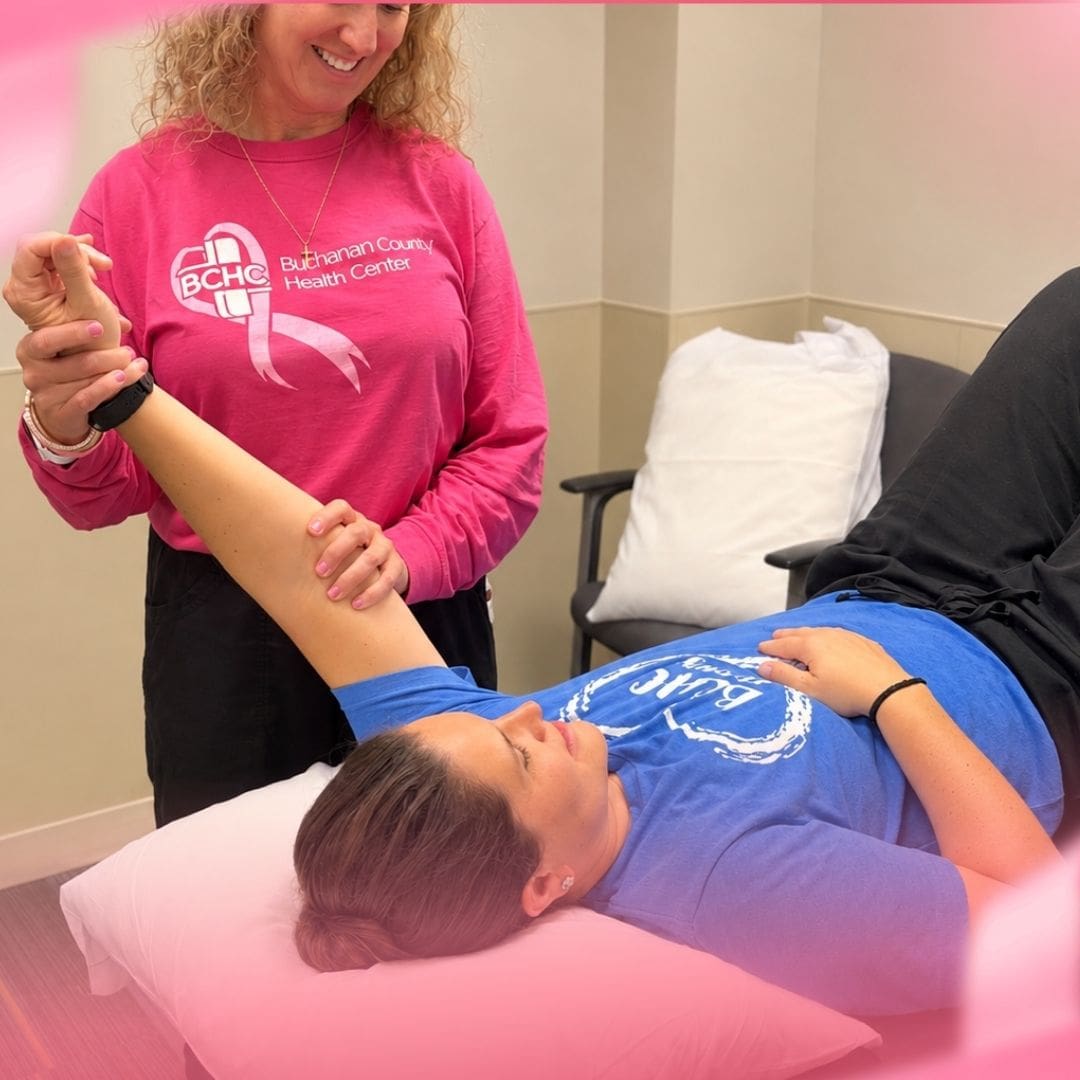
After breast cancer surgery or treatment, you may experience pain, tightness, or restricted movement around your chest, shoulder, and surgical area. Gentle exercises, stretching, and hands-on techniques can help improve comfort and mobility.
Restore Arm and Shoulder Movement
Breast surgery, particularly mastectomy or lymph node surgery, can lead to stiffness, weakness, and difficulty moving your arm and shoulder. Therapy can help restore comfortable movement and make everyday activities easier.
Rebuild Strength and Energy
Cancer treatment and surgery can leave you feeling weak or fatigued. A gradual exercise program tailored to your needs can help rebuild strength, improve endurance, and support your return to daily activities.
Manage Lymphedema and Reduce the Risk of Complications
Breast cancer treatment can bring changes to the body, and a lymphedema therapist can be an important part of the recovery journey. Surgery, lymph node removal, and radiation can affect the lymphatic system and increase the risk of swelling, tightness, discomfort, and limited movement in the breast, chest, arm, or hand.
At BCHC, our trained lymphedema therapist, Megan, can help you understand your individual risk, recognize early signs of lymphedema, and access specialized care to manage swelling when it occurs.
Treatment may include manual lymphatic drainage, compression, therapeutic exercise, skin care, education, and personalized home exercise programs tailored to your needs.
Lymphedema therapy is about more than managing swelling. It’s about helping breast cancer patients and survivors feel more comfortable and confident in their bodies so they can return to the activities they love.
If you’ve undergone breast cancer treatment or notice swelling or changes in movement, talk with your cancer care provider about whether lymphedema therapy may be right for you.
Improve Posture and Reduce Discomfort
Following surgery, you may naturally adjust how you stand or move to protect the affected area. Over time, these changes can contribute to rounded shoulders, altered posture, and neck or back discomfort. Therapy can help address these changes, improve posture, and restore more comfortable movement patterns.
What Should You Expect From Therapy?
Your recovery is unique, and your therapy program should be, too. Breast cancer rehabilitation is individualized and progresses as your body heals.
Depending on your needs, you may work with your therapist to:
- Learn safe, effective exercises to perform at home.
- Understand which activities are appropriate for your stage of recovery and when to modify or stop an exercise.
- Gradually improve strength, flexibility, and mobility.
- Practice functional movements that make everyday activities easier and more comfortable.
You shouldn’t feel that you need to push through significant pain to make progress. Your therapist can help you find an appropriate pace and adjust your program to meet your needs.
You don’t have to wait until you experience pain or limited movement to seek help. Some patients benefit from seeing a therapist early after surgery to establish a baseline, learn safe movements, and understand how to support their recovery.
Supporting Your Recovery, Every Step of the Way
Rehabilitation is about more than completing exercises. It’s about helping you return to your daily routines, participate in the activities you love, and feel confident using your body again.
With individualized guidance, education, and a progressive exercise program, physical and occupational therapy can help address the physical effects of breast cancer treatment and support long-term improvements in movement and function.
We’re Here to Help
If you have questions about rehabilitation after breast cancer treatment, talk with your cancer care provider about whether physical or occupational therapy may be appropriate for you.
You can also contact Kimberly or Megan in the BCHC Physical and Occupational Therapy Department to learn more about available services and how our team can support your recovery.
At Buchanan County Health Center, we’re here to help you move forward with strength and confidence.